Work through planning permission, structural requirements, layout, and budget before your brief
A homeowner once told us they had already chosen their tiles, ordered a kitchen island, and booked the bi-folds, only to discover during the planning application that the extension exceeded the permitted development limit by half a metre. The project stalled for weeks while the design was redrawn.
A kitchen extension is one of the most disruptive projects a homeowner takes on, and one of the most valuable, which is why getting the order of decisions right matters more here than almost anywhere else in the build. Planning, structure, layout, and budget each depend on the one before, and getting that order wrong causes most of the delays and overruns homeowners associate with building work.
This guide covers the permissions and structural requirements, then explains how to design the layout around how you live and what shapes the cost and timeline.
Start with The Structural & Planning Groundwork
Before you choose a single tile or worktop, you need to know whether your kitchen extension requires planning permission or falls under permitted development. This decision shapes everything else, including your timeline and your professional fee budget.
Permitted Development vs Planning Permission
Many single storey rear and side extensions can be built under permitted development rights, meaning you do not need to apply for planning permission. The size limits that decide this are fairly specific.
A single storey extension is generally allowed if it meets these limits:
- It must not extend beyond the rear wall by more than 3 metres.
- A larger extension allowance permits up to 6 metres of depth.
- The extension must not exceed 4 metres in height.
Larger extensions within these bigger limits trigger a neighbour consultation scheme, giving adjoining neighbours the chance to object before work starts. Extensions beyond these limits, or in front of a wall forming the principal elevation, will need a full planning application.
It is worth checking early whether your property sits in a conservation area or other Article 2(3) land or has had permitted development rights removed by an Article 4 direction, since this changes what you can build without an application. If unsure, a check with your local planning authority will confirm your position [1].
When You Will Need a Structural Engineer & Party Wall Agreement
Any extension that involves removing a load-bearing wall, creating a large opening for bi-fold doors, or altering the roof structure will need input from a structural engineer. Their calculations form part of your building regulations submission and give your contractor the details needed to price the job accurately.
If your extension involves work on or near a shared wall with a neighbouring property, the Party Wall etc Act 1996 applies. You must notify all adjoining owners in writing at least two months before the planned start date [2].
A neighbour who receives a Party Wall notice can respond in one of three ways:
- They can give written consent to the work.
- They can refuse and trigger the dispute resolution procedure.
- They can do nothing, which counts as a dispute after 14 days.
Where a project also involves a full renovation alongside the extension, coordinating structural and decorative trades under one team avoids the handover gaps that cause delays.
Plan the Layout & Design Around How You Live
Once the structural and planning picture is clear, you can start designing around how your household actually uses the space. A kitchen extension that looks good on paper but does not suit your daily routine will frustrate you for years.
Choosing Between Open Plan, Bi-Fold Doors, & Roof Lanterns
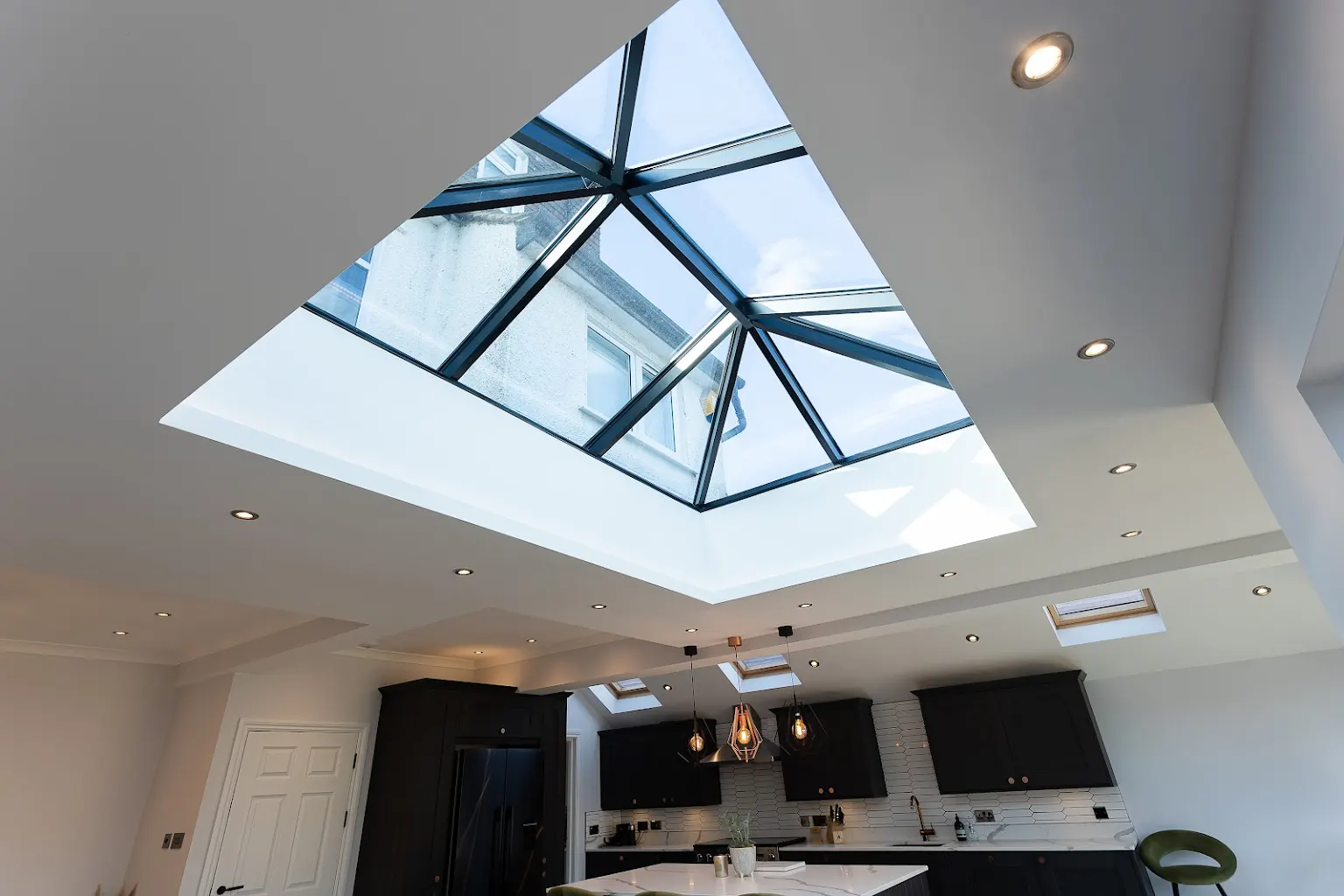
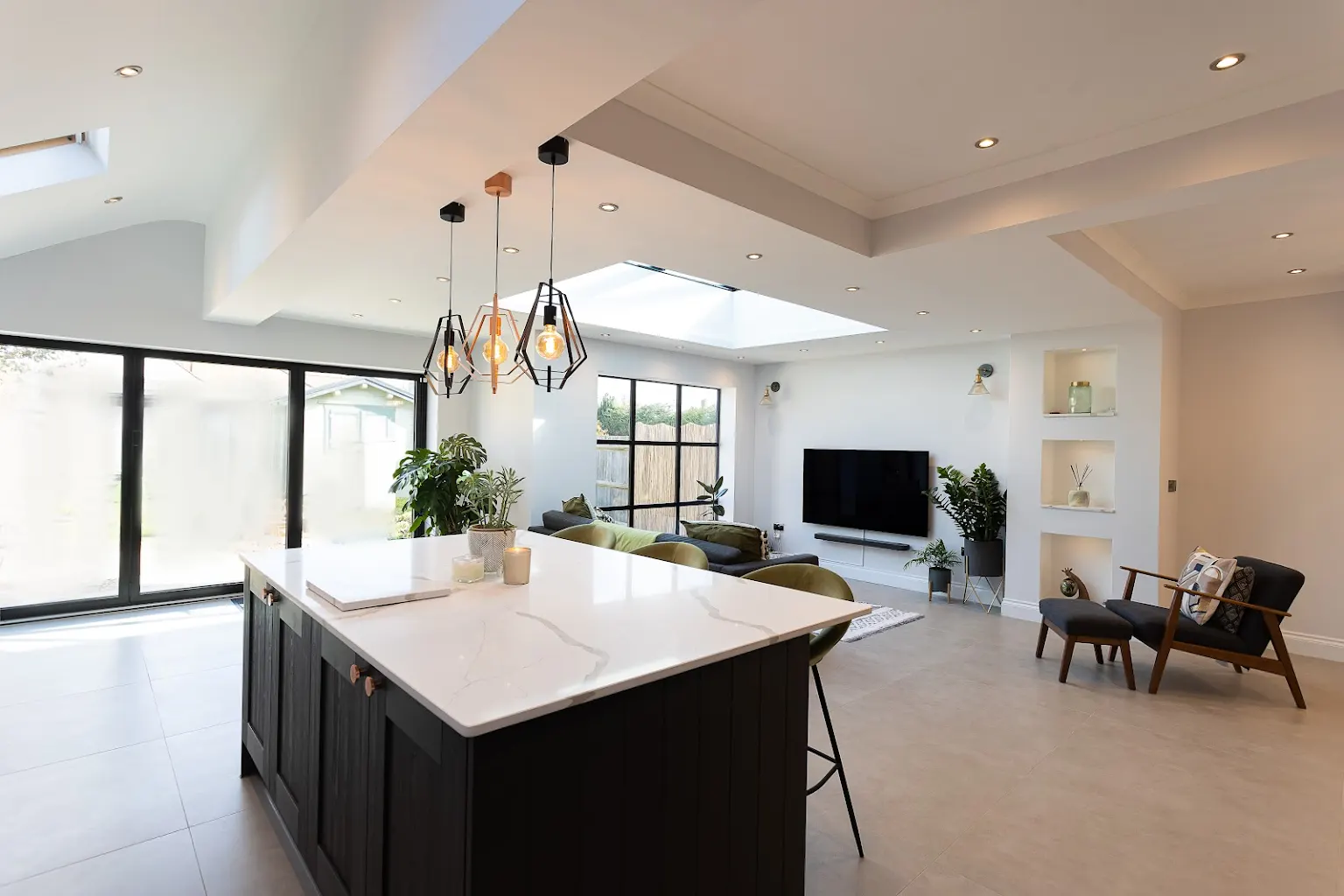
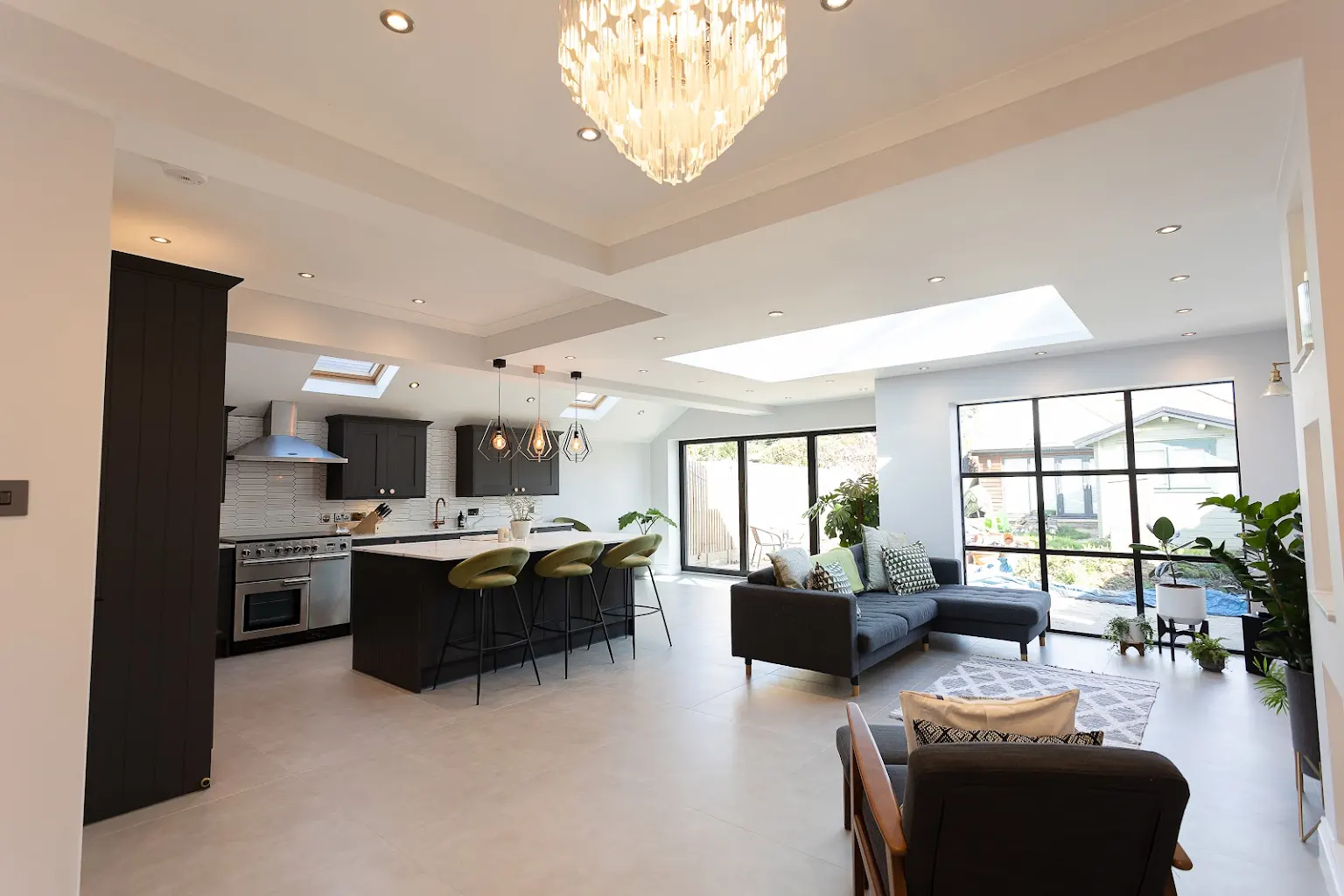
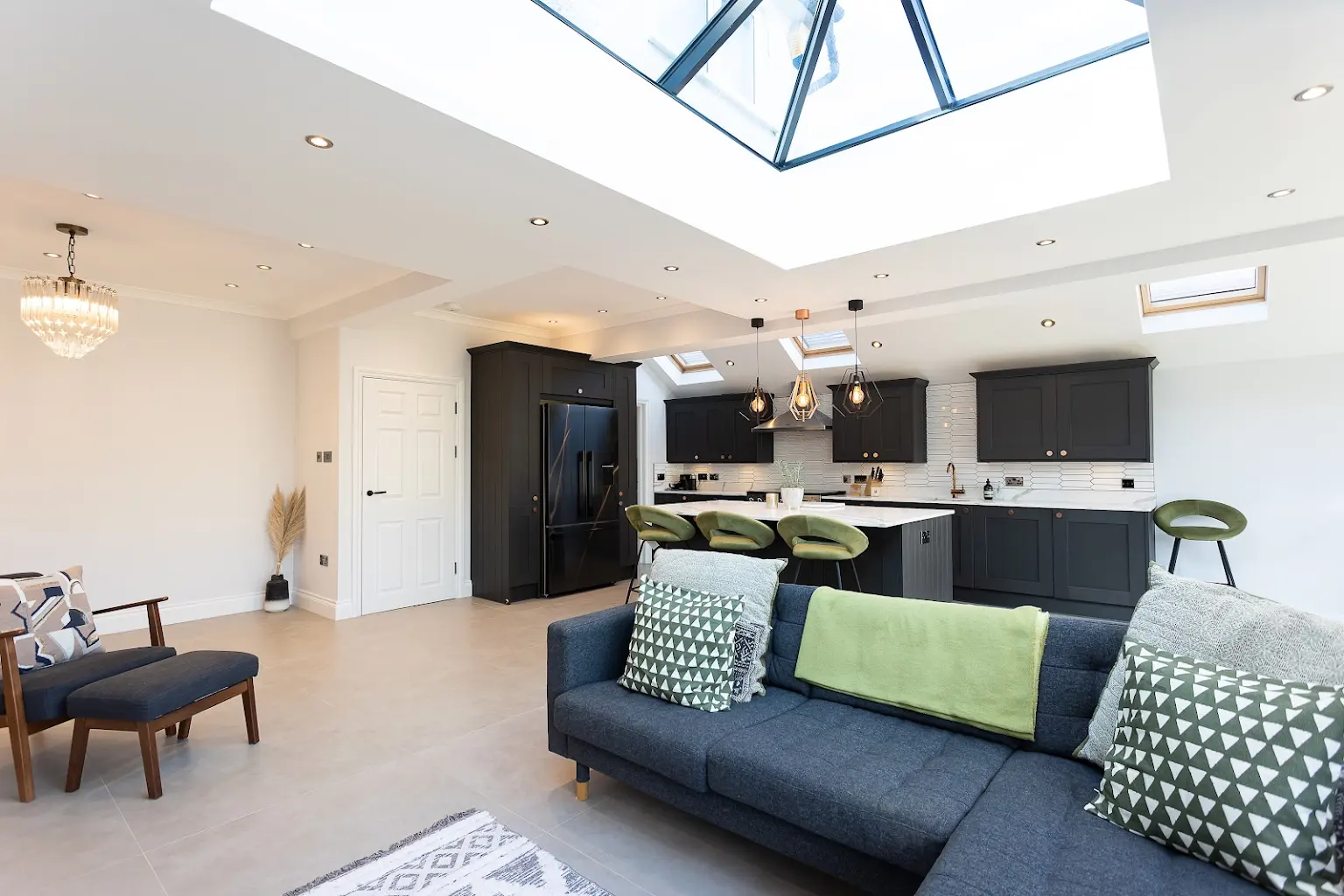
Open-plan layouts remain popular because they connect cooking, dining, and living spaces into one area, which works well for households that want to entertain or keep an eye on children while cooking. Bi-fold or sliding doors across the rear extend that space outdoors in summer, while a roof lantern brings natural light into the centre of the room. Rear, sidereturn, and wraparound layouts each suit this open-plan approach differently, depending on how much of your existing footprint you are working with.
For exterior work to qualify as permitted development, materials must give a similar visual appearance, in colour and style, to those on the existing house, though they need not be identical. If you are planning large expanses of glazing or a different roof material, check this against your permitted development allowance.
The most common layout mistakes are not about style but workflow. A kitchen island blocking the path between the cooker and sink, sockets placed before appliance positions, and storage left as an afterthought all cause daily friction once the build is finished. Spend time on the working triangle between your sink, hob, and fridge before finalising cabinetry positions, since moving a line on a drawing is far cheaper than moving plumbing and electrics later.

Budget Realistically & Sequence the Build
With planning and design decisions in place, you can put together a realistic budget and understand how the build will run from start to finish.
What Affects the Cost of a Kitchen Extension
Costs vary depending on the size of the extension, the specification of fittings, and the complexity of any structural work, such as steel beams or underpinning. It is also worth building in a contingency, since older properties can throw up foundations, drainage, or wiring that do not match the original survey.
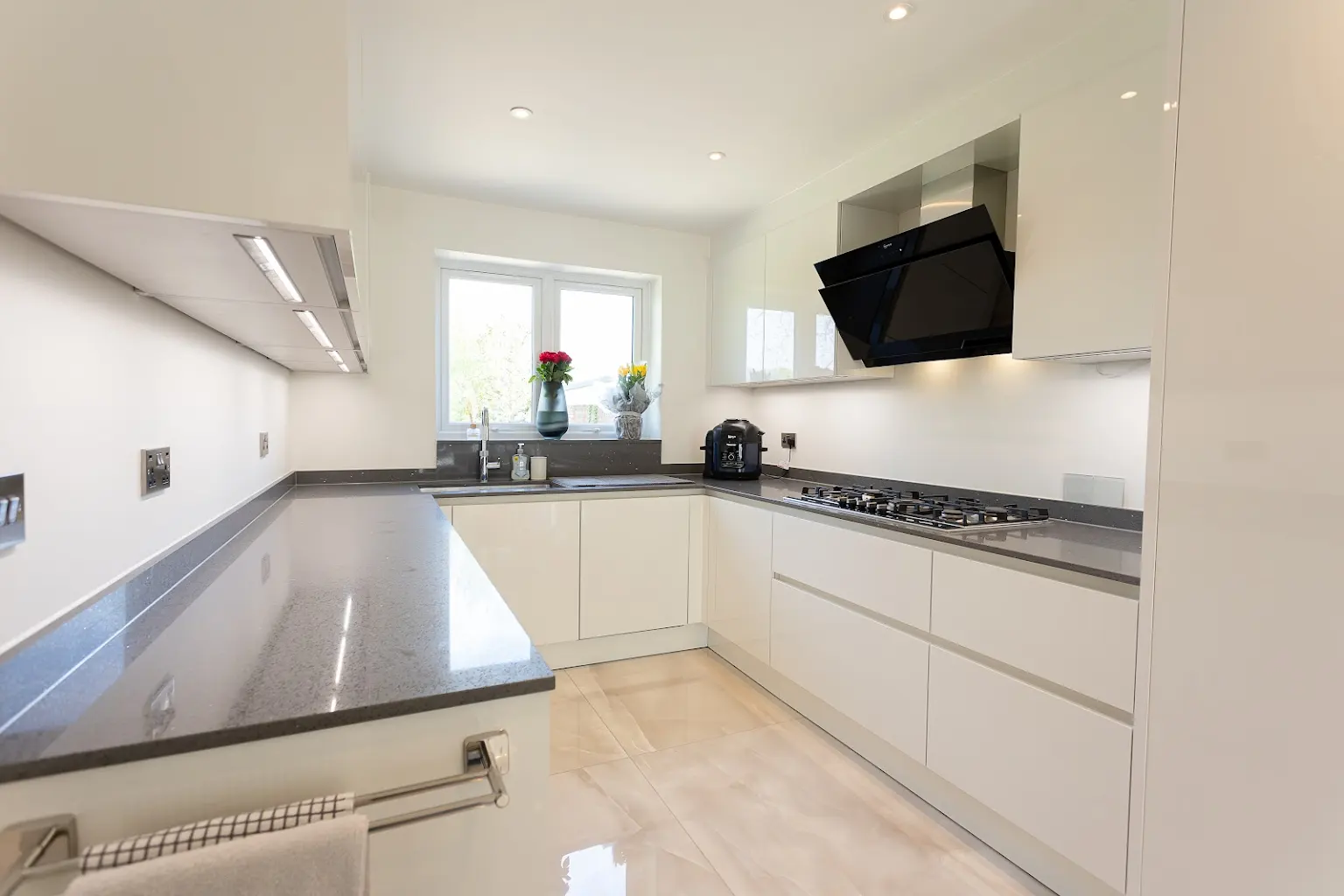
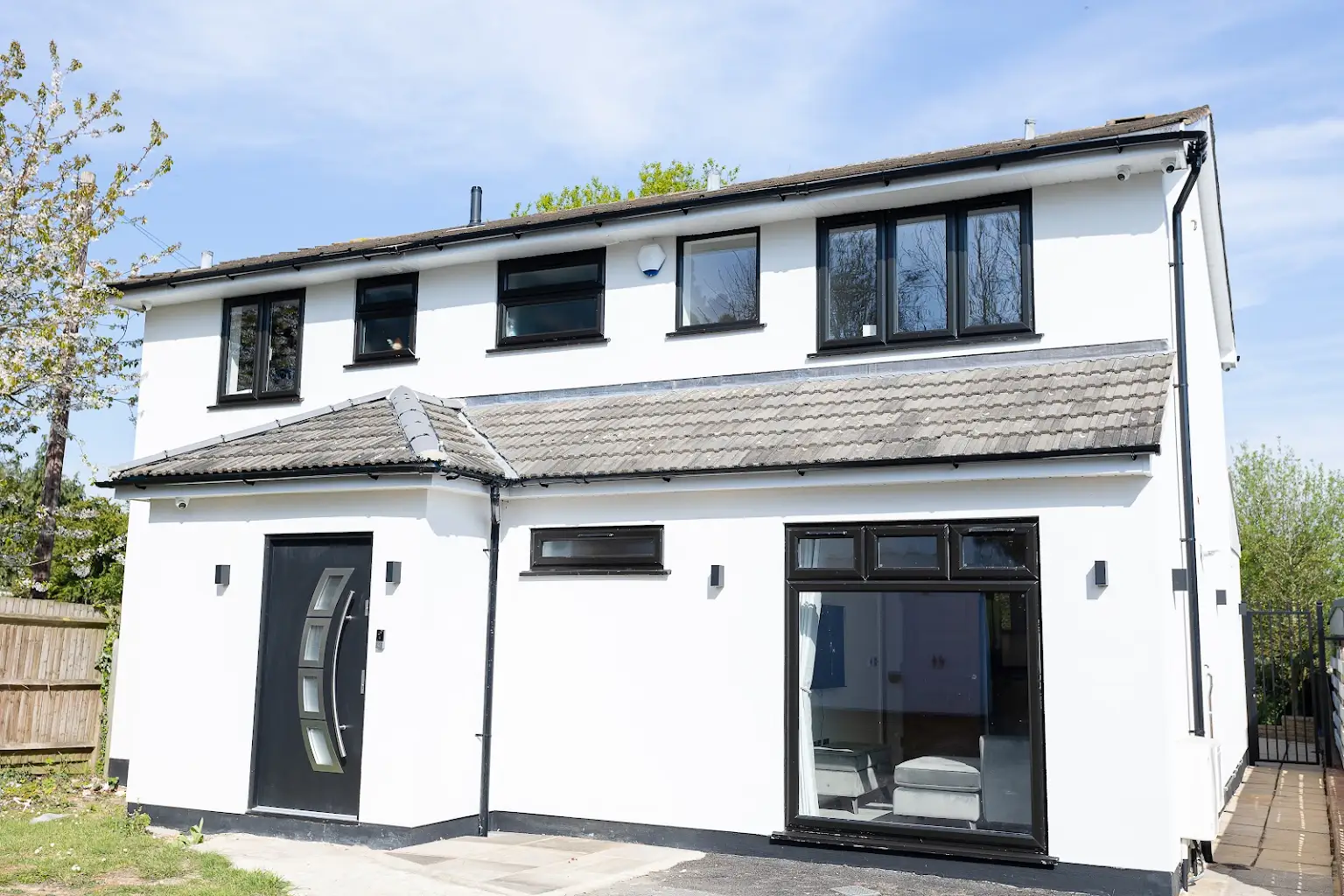
Our kitchen extension in Maidenhead, completed under the same start-to-end model, shows how these cost factors play out on a real project.
Typical Project Timeline & Trades Sequencing
A kitchen extension typically takes 3 to 9 months from initial consultation to completion, depending on the size and complexity. The build itself follows a fairly fixed order, with each trade depending on the one before it.
The build sequence generally runs in this order:
- Groundworks and foundations come first.
- The structural shell and roof follow.
- First, fix the electrics and plumbing.
- Plastering is completed before any fittings go in.
- The kitchen fit-out, with second fix and decoration, comes last.
Trying to compress this sequence, for example, by ordering a kitchen before the first fix is complete, is one of the most common causes of delay. A contractor managing the full sequence under one team avoids the gaps that occur when separate trades are booked independently.
Get the Planning Right Before You Call a Contractor
Going into a kitchen extension without this groundwork often means delays while decisions are made mid-build, with costs creeping up as gaps in the original plan come to light. Work through planning permission, structural requirements, layout, and budget first, and you go into your first contractor meeting with a clear brief, in a strong position to get an accurate quote and a realistic timeline from the outset.
SM London Construction has been managing kitchen extensions across London and the Home Counties since 2015, covering everything from initial design through to the final fit-out under one team. Our approach means there is a single point of contact responsible for the result, backed by a 10-year structural warranty and accreditation from TrustMark, TrustATrader, Mums Trusted, the Federation of Master Builders, and Checkatrade.
Call 0208 226 5511 or book a consultation to find out how we can help plan your kitchen extension.
External Sources
[1] GOV.UK, Ministry of Housing, Communities & Local Government (MHCLG), Technical Guidance, Permitted Development Rights for Householders (2019): https://assets.publishing.service.gov.uk/media/5d77afc8e5274a27cdb2c9e9/190910_Tech_Guide_for_publishing.pdf
[2] GOV.UK, Ministry of Housing, Communities & Local Government (MHCLG), Department for Levelling Up, Housing & Communities (DLUHC), Guidance, the Party Wall etc Act 1996: Explanatory Booklet (2016): https://www.gov.uk/government/publications/preventing-and-resolving-disputes-in-relation-to-party-walls/the-party-wall-etc-act-1996-explanatory-booklet