Understanding the process, planning rules, and practical considerations before you build
Most homeowners who come to us have already spent weeks looking at the back of their house. The kitchen feels too small. The living space does not work for the way the family uses it. The garden is there, but the house does not connect to it.
The answer is often more straightforward than it appears, but the planning rules, structural considerations, and build sequencing behind a rear extension are worth understanding before committing to anything. Projects run into difficulty not because of poor workmanship, but because homeowners did not have a clear picture of the process before work started.
This guide covers:
- What a rear extension involves structurally and why the sequence matters.
- What permitted development allows for London homes.
- How the build runs from groundworks to completion certificate.
Understanding all three puts you in a far stronger position before you speak to anyone.
What Goes into a Rear Extension & Why the Sequence Matters
A rear extension adds a new structure to the back of your property, increasing the ground floor footprint by building out from the rear elevation. It is the most common type of house extension carried out on London homes, and for good reason: most properties have usable garden space at the rear, and the works stay away from the street, which tends to simplify planning.
The extension sits on new foundations, carries its own roof structure, and connects to the existing house through what was originally an external wall. That connection typically involves removing part of the rear wall and installing a steel beam to carry the load above.
Common Uses & Layout Options
Most homeowners extend the rear to resolve a specific problem with the ground floor. The three most common uses are:
- Opening up a kitchen and dining area into a full open-plan living space.
- Creating a new reception room separate from the main living area.
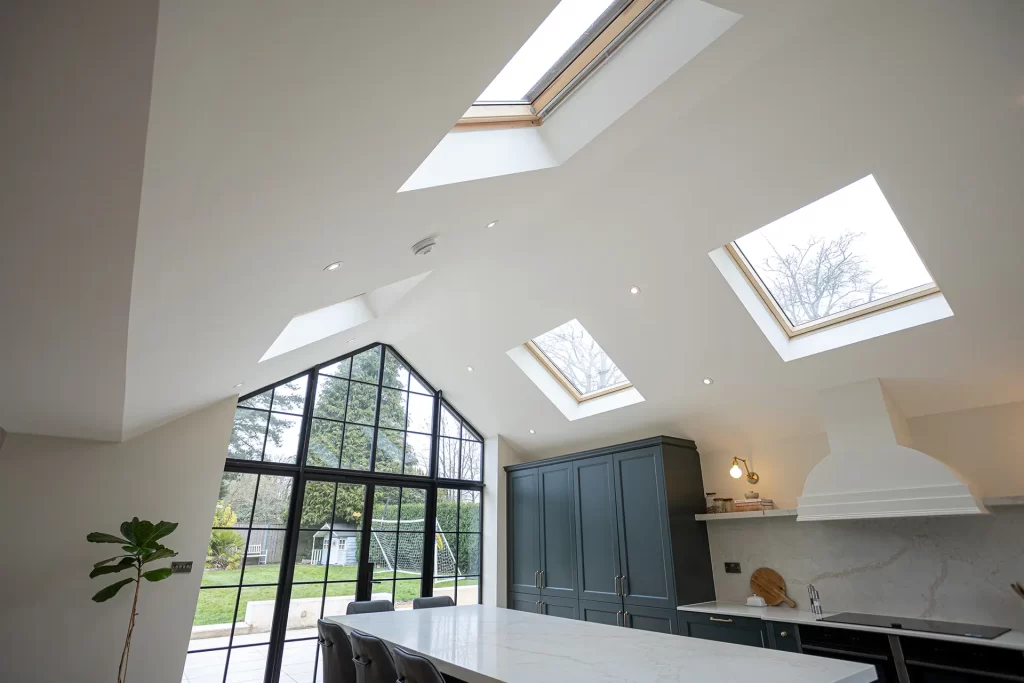
- Improving the connection between the ground floor and the garden through glazed bifold or sliding doors.
The footprint depends on the available plot depth, the permitted development limits that apply, and the structural engineer’s assessment of the ground conditions. A compact extension might add three or four metres of depth; larger projects can extend six metres or more, subject to planning approval.
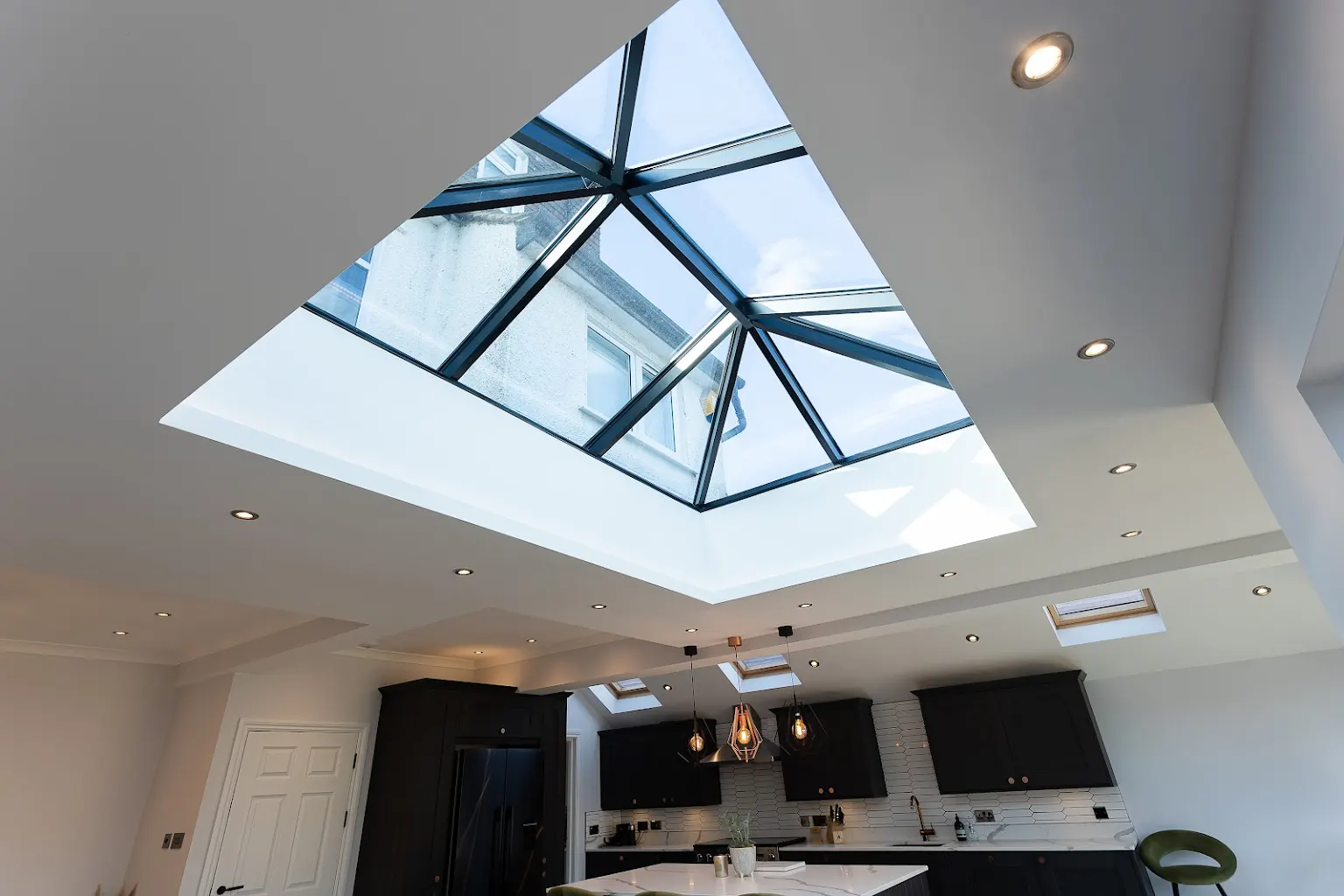
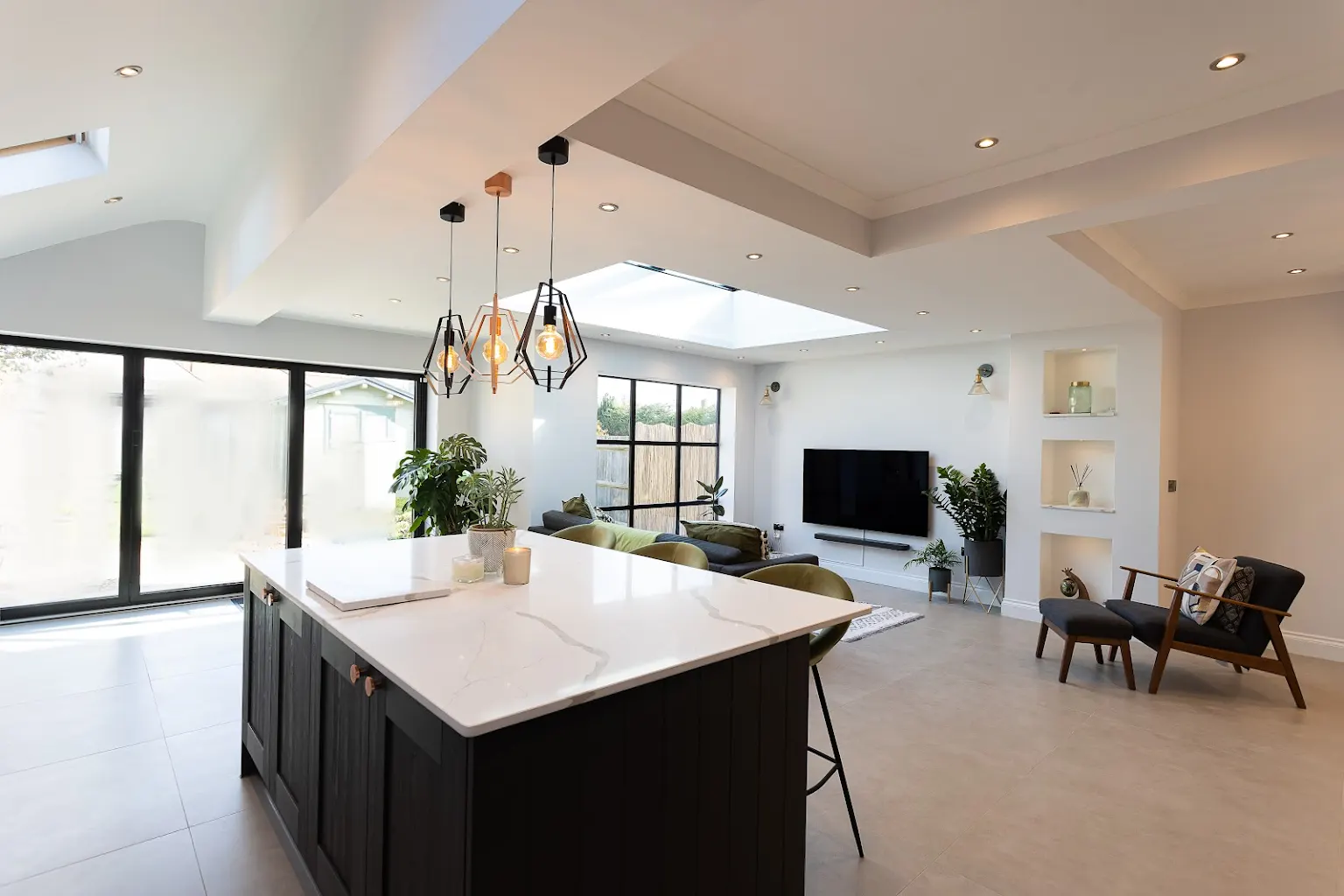
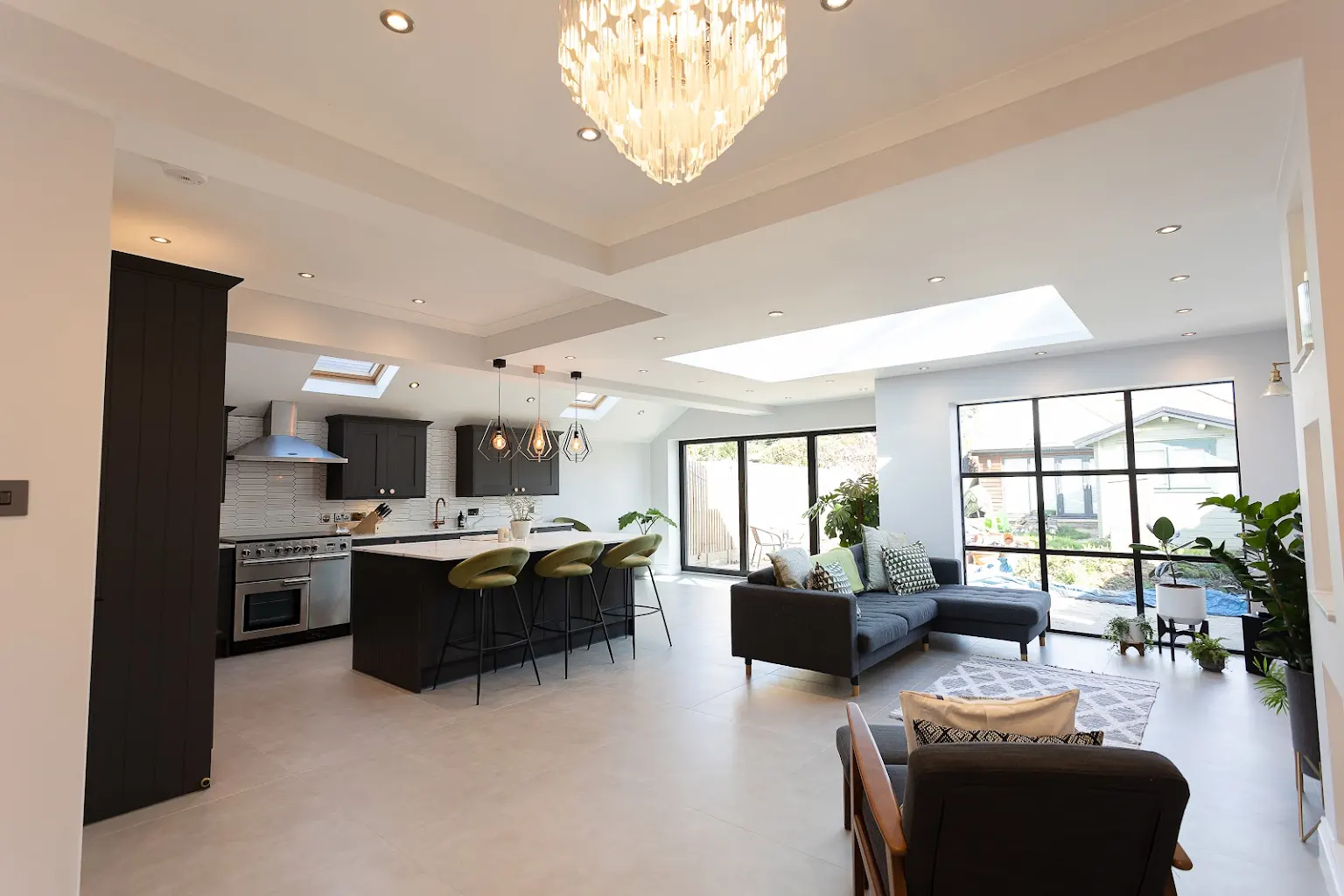
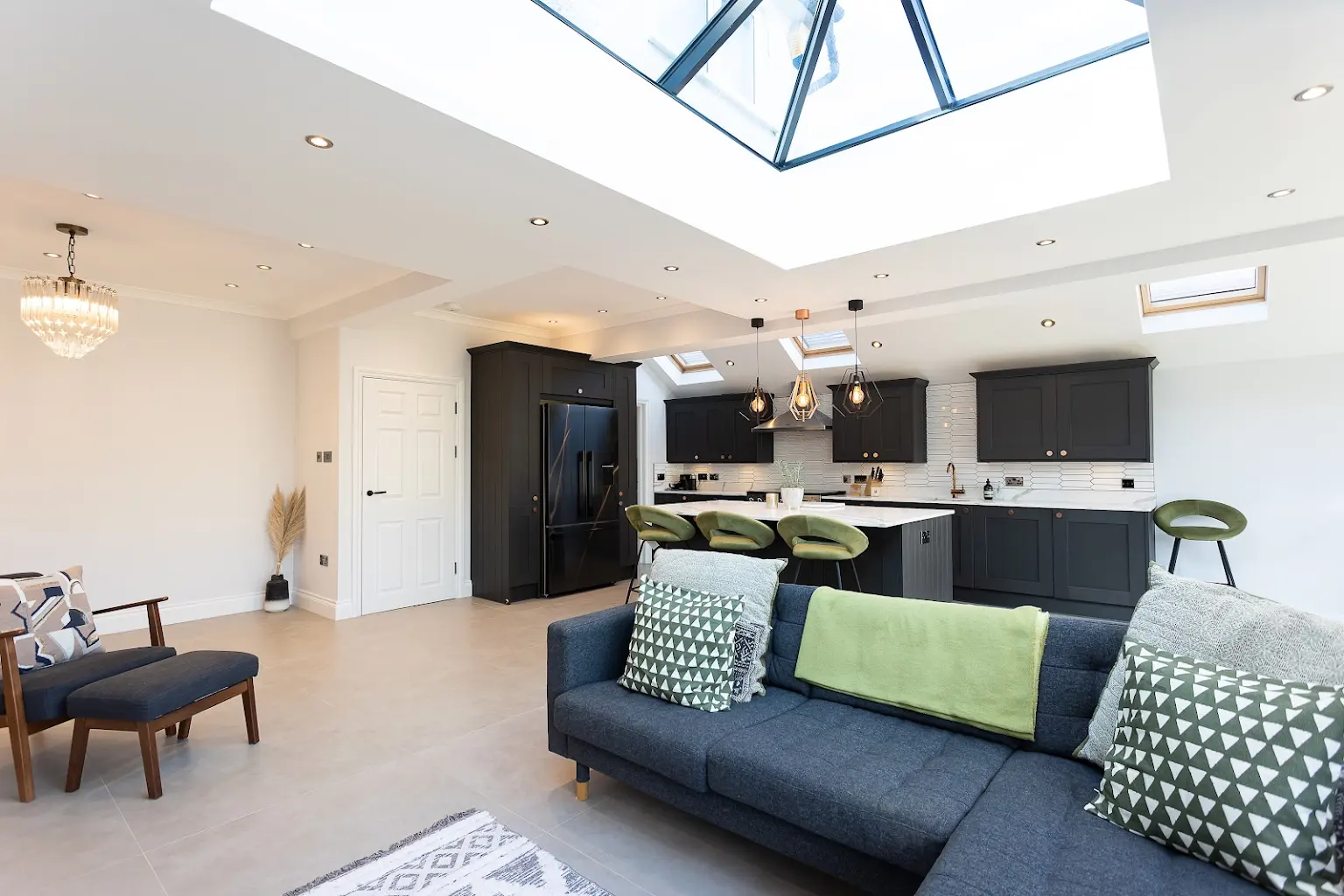
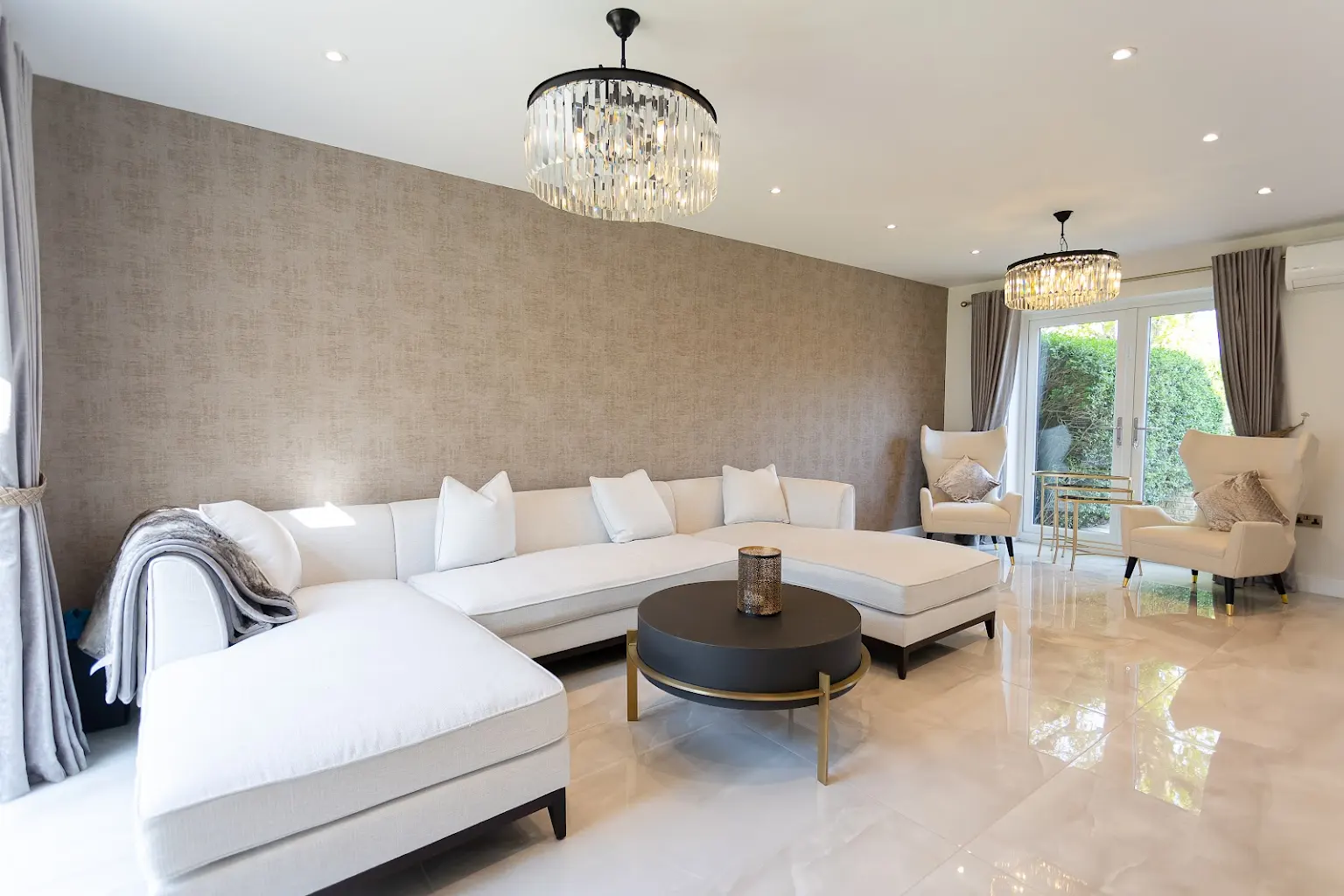
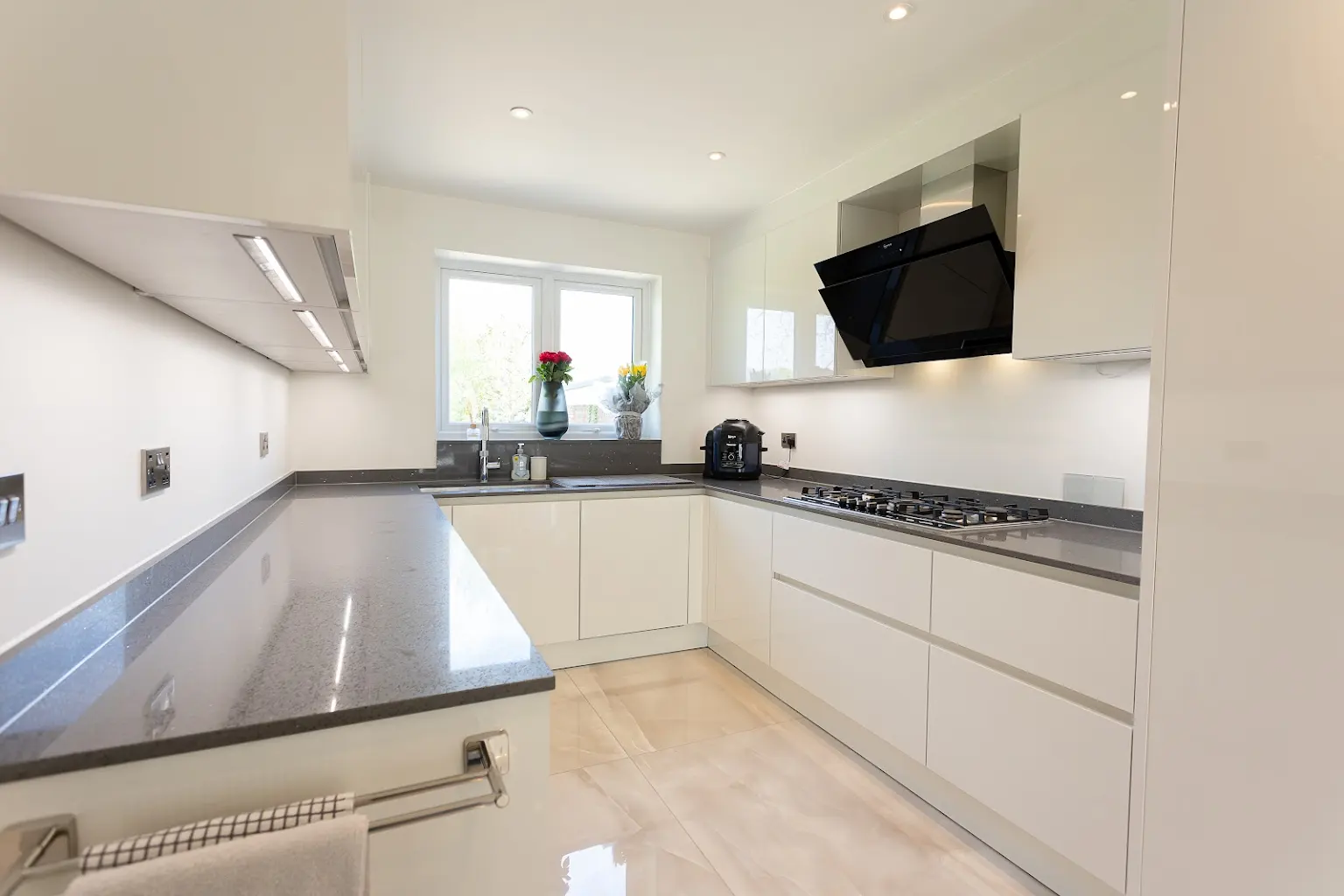
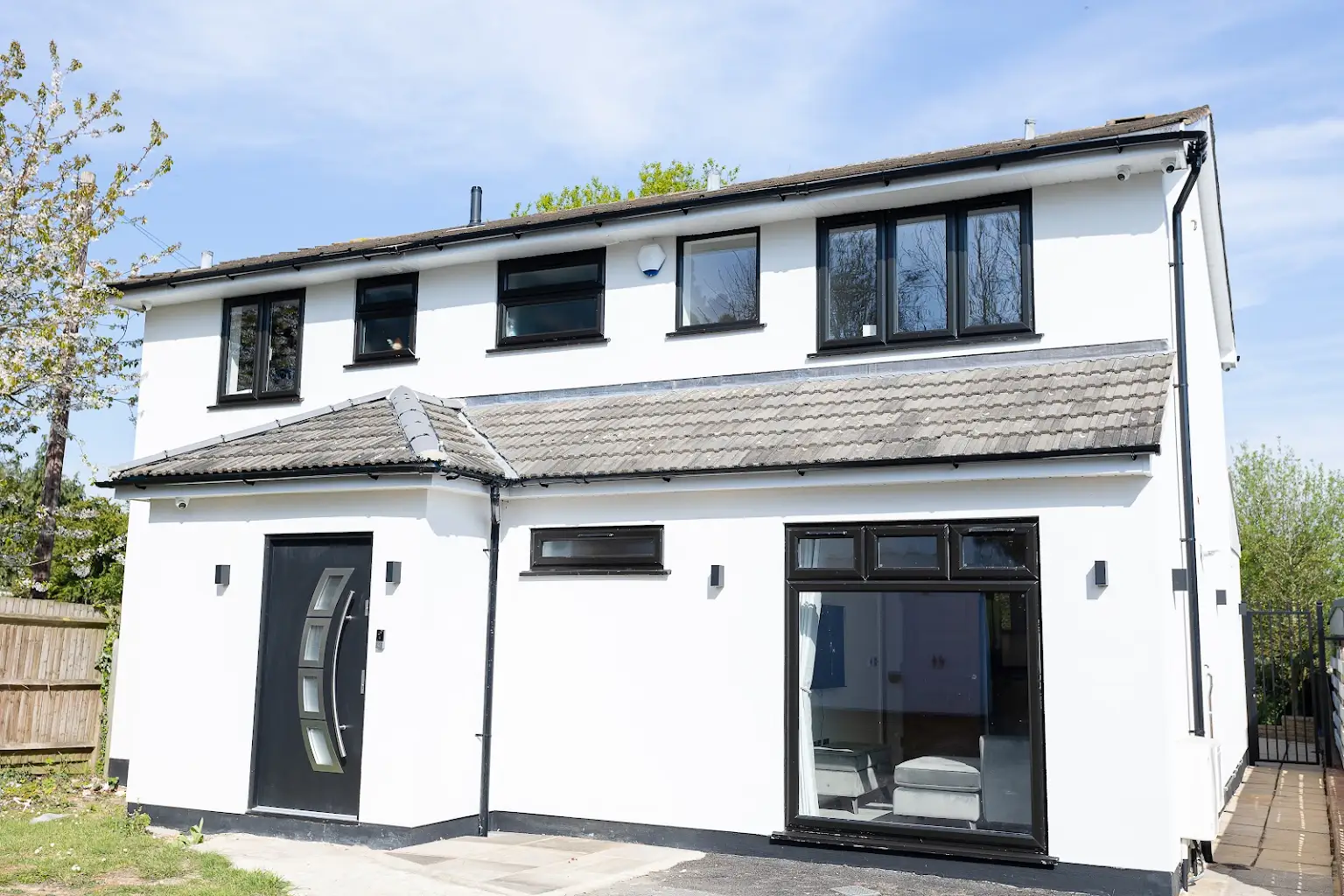
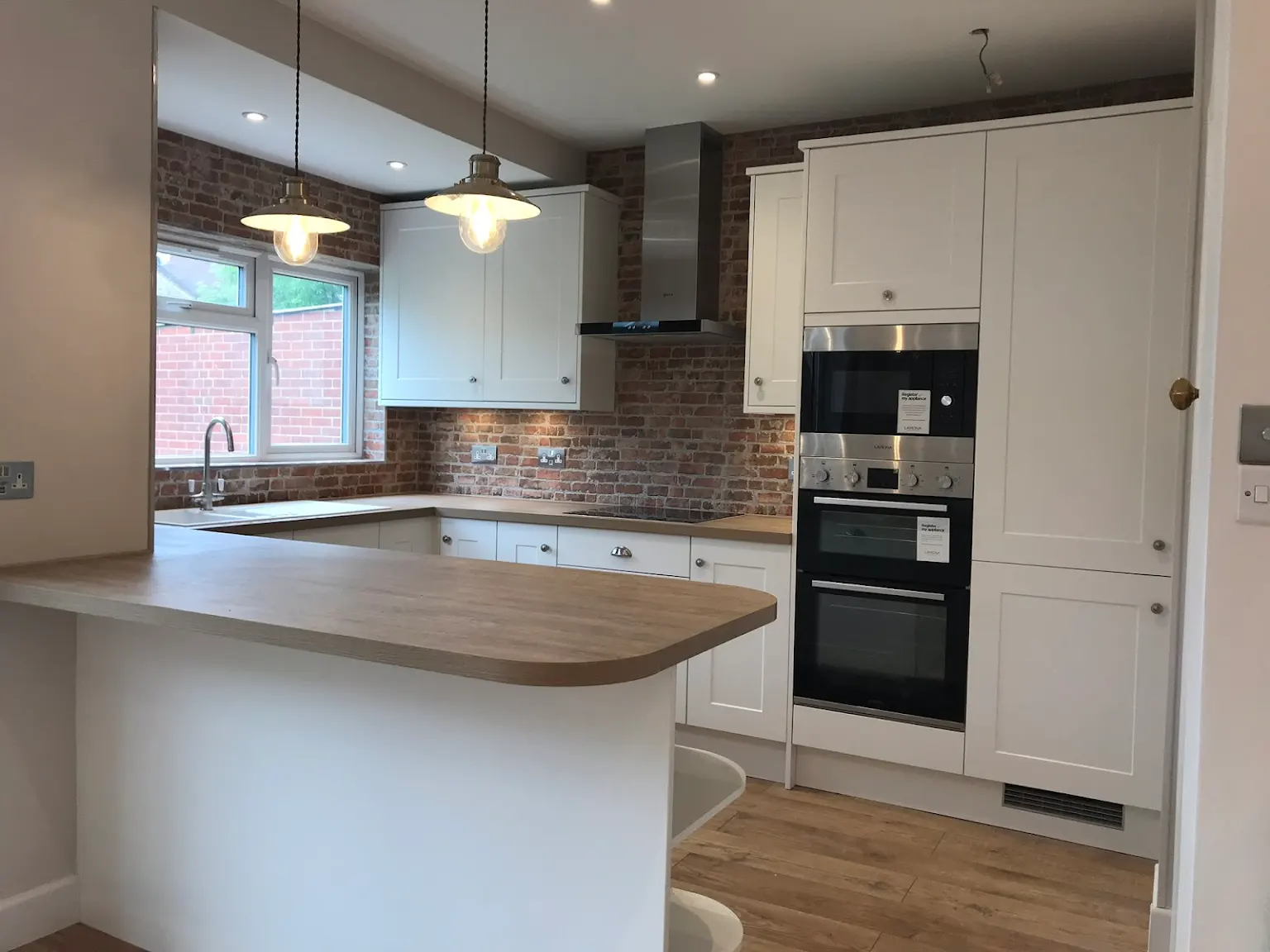
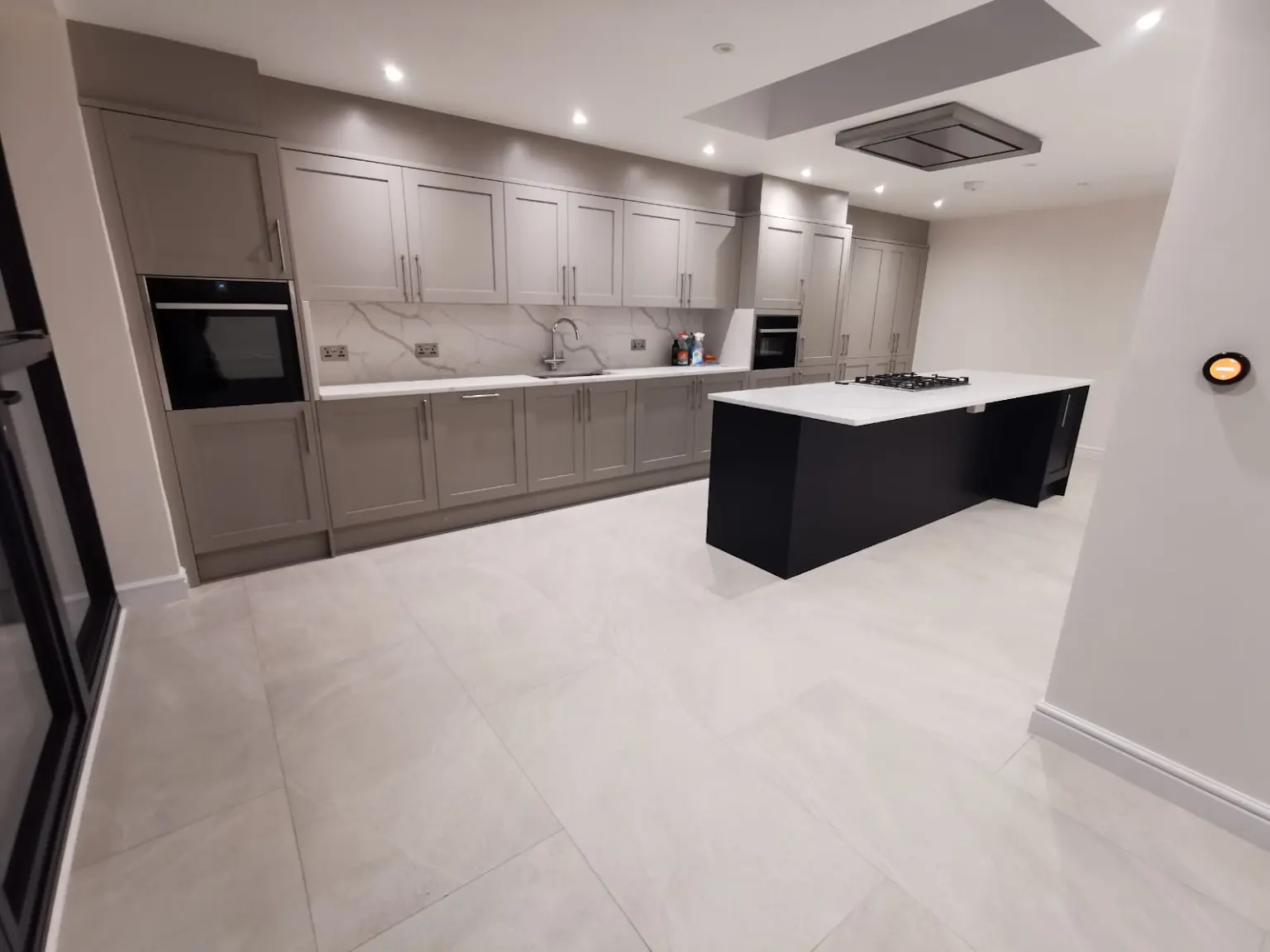
For a practical example of how a rear extension can open up a kitchen-dining area into a connected ground floor, our Gerrards Cross project shows how the works were sequenced and what the finished layout achieved.
Single Storey vs Two Storey Rear Extensions
Most single storey rear extensions sit under a flat or pitched roof and add one level of habitable space. A two storey rear extension adds both a ground floor room and a first floor room above, typically a bedroom or bathroom, and involves more structural complexity and a longer build programme.
For homeowners who need both ground floor living space and an additional bedroom, a two storey extension is worth considering at the design stage rather than treating the two as separate projects later.
What the Permitted Development Rules Allow
Many single storey rear extensions in London fall within permitted development rights, meaning no formal planning application is required. According to the Planning Portal (PP), a single storey rear extension can extend up to three metres beyond the original rear wall for any non-detached property, or up to four metres for a detached house. Flats and maisonettes are excluded from these rules entirely [1].
Under the prior approval route, the limit rises to six metres for non-detached properties and eight metres for detached homes. Prior approval requires notifying your local planning authority, which will confirm whether approval is needed and consult your neighbours as part of that process.
When Planning Permission Is Required
Planning permission is required in the following circumstances:
- The extension exceeds the permitted development limits.
- The property sits in a conservation area or other Article 2(3) designated land.
- The property is listed, or permitted development rights have been removed by an Article 4 direction.
If you are unsure whether your property qualifies, a Lawful Development Certificate (LDC) confirms the legal position in writing before building work begins. This is worth obtaining if you plan to sell or remortgage [2].
For homeowners whose rear plot does not allow a deep single storey run, a wrap-around extension can achieve a larger ground floor footprint within the permitted development envelope.
Party Wall Agreements & Neighbour Notification
A party wall agreement is a separate legal requirement from planning permission, and the two are often confused. Under the Party Wall etc. Act 1996, government guidance confirms you must notify affected neighbours in writing before excavating new foundations within three metres of a neighbouring property, which most rear extension groundworks in London trigger [3].
Serving notice does not mean your neighbour can block the project. It gives them the right to appoint a surveyor and sets out how disputes are handled. An experienced contractor will ask about the party wall status before committing to a start date.
How a Rear Extension Build Runs, Stage by Stage
A single storey rear extension typically takes between three and five months from groundworks to completion. The build breaks down into distinct phases, and each depends on the previous one.
The key stages are:
- Foundations are dug and cast to a depth suited to the ground conditions. London clay expands and contracts with moisture, so a structural engineer’s ground assessment before the design is finalised can prevent costly discoveries during the dig.
- The structural frame goes up once the foundations are complete. In most rear extensions, this involves installing a steel beam where the original rear wall once stood, carrying the load above and allowing the opening between old and new space to be as wide as possible.
- Building control inspections take place at key stages throughout the build. All rear extension work must comply with building regulations, regardless of whether planning permission was required, covering structural integrity, insulation, fire safety, drainage, and electrical and plumbing installations.
A completion certificate is issued at the end of the build. Without it, you cannot demonstrate to a buyer or mortgage lender that the works were carried out correctly, so tracking sign-off as part of the build programme is preferable to chasing it after something has already been covered over.
Is a Rear Extension Right for Your Home?
If the ground floor is not working, a rear extension is one of the most reliable ways to change that. With the structural design right, the planning position confirmed upfront, and the build managed from groundworks to sign-off, the result is usable space that makes your home work for the way you live.
SM London Construction has been delivering residential rear extensions across London since 2015. Our service covers design, planning, structural work, and build management under one team, with a 10-year structural warranty included as standard, and our aftercare programme covers post-completion snagging, a 12-month return visit, and optional ongoing maintenance.
Call 0208 226 5511 or book a consultation and the team will come to you, assess your property, and give you an honest picture of what is possible.
External Sources
[1] Planning Portal (PP), Extensions, Planning Permission: https://www.planningportal.co.uk/permission/common-projects/extensions/planning-permission
[2] Planning Portal (PP), Extensions, Planning Permission, Lawful Development Certificates: https://www.planningportal.co.uk/permission/responsibilities/planning-permission/lawful-development-certificates
[3] GOV.UK, Party Walls and Building Work: https://www.gov.uk/party-walls-building-works