This guide covers what drives that value up, how dormers compare to other loft conversion types, and how the numbers stack up against the cost of moving house instead
Most homeowners considering a dormer loft conversion want an honest answer to one question before anything else: will this actually pay off? It’s a fair thing to want clarity on before committing tens of thousands of pounds to a project. So, does a loft conversion add value? The good news is that the data on this is genuinely strong, and this is one of the more straightforward questions in home improvement to answer with confidence.
Does a Dormer Loft Conversion Add Value to Your Home?
Yes, and the figures back this up clearly. Nationwide’s own research found that adding a large double bedroom and bathroom via a loft conversion can lift the value of a typical three-bed, one-bath house by up to 24%, around £65,700 on average [1]. Most dormer conversions in the UK deliver a property value uplift somewhere between 18% and 25%, making them one of the highest-return improvements available to homeowners.
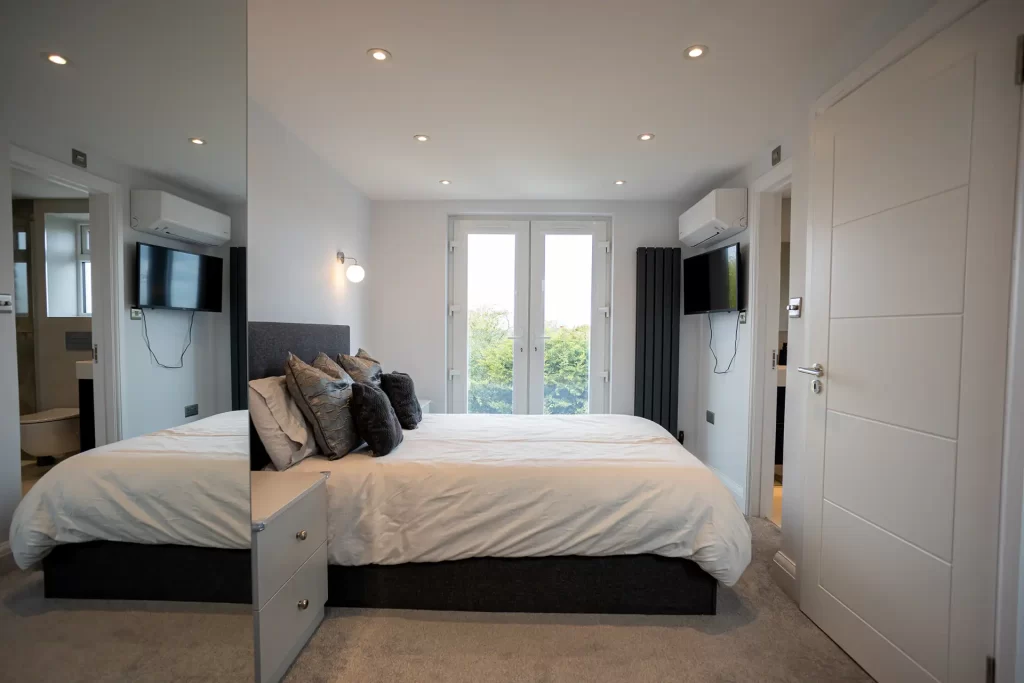
This isn’t a marginal gain. A well-executed dormer genuinely changes what a property is worth, because it changes what a property offers: a proper double bedroom, often with an en-suite, in a home that previously had one room fewer. That shift into a higher bedroom bracket is where the real financial upside comes from, and it’s worth understanding in more detail.
Dormer Conversions vs Other Loft Types: Comparing the Numbers
Not all loft conversions deliver the same return, and dormers consistently sit in a strong position for both cost and outcome:
- Velux or Rooflight Conversions: The cheapest option, typically £28,000 to £45,000, with a more modest home improvement ROI since they add less usable floor space [2].
- Standard Rear Dormers: Usually £45,000 to £62,500, delivering close to double the usable space of a Velux conversion for around half as much again in cost, with return on investment figures that regularly outperform other loft types [2].
- L-Shaped or Double Dormers: Typically £55,000 to £85,000, well suited to larger Victorian and terraced properties where the extra floor area supports a bigger bedroom count [2].
- Mansards: The most expensive option, often exceeding £90,000, and while they add the most absolute floor space, dormers tend to offer more consistent returns relative to spend [2].
This is why so many industry guides describe the rear dormer with en-suite as the resale sweet spot.
What Actually Drives the Value Up? Bedrooms, En-Suites & Finish Quality
The single biggest factor behind the question, ‘does a loft conversion add value as strongly as the headline figures suggest?’, comes down to bedroom count. Nationwide’s analysis shows an additional bedroom can add around 13% to a property’s value on its own, with a further 4% typically added by an extra bathroom [3].
Combine the two, as a dormer with an en-suite naturally does, and you’re looking at the top end of the uplift range. This is also where extra bedroom value becomes most tangible: a loft room that functions as a genuine double bedroom, rather than a converted attic space, is what buyers are paying for. Finish quality plays its part too. Proper headroom, good natural light, and an accessible staircase and layout all help the room read as a true extension of the home rather than an afterthought.
Why Location Shapes the Numbers
While the percentage uplift from a dormer conversion holds up well across the UK, the cash value of that uplift depends heavily on where you live. In London and the South East, a house price increase driven by a well-specified dormer can translate into some of the largest absolute gains in the country, often reflecting strong local demand for extra bedrooms.
An estate agent valuation carried out before and after the work will typically reflect this local context: the same conversion adds a different cash amount depending on what comparable four-bedroom homes are achieving on your street. The sensible approach is to specify the work in line with local ceiling prices, so the investment is fully reflected when the property is valued or sold.
Loft Conversion vs Extension: Extending vs Moving House
For many homeowners, the real comparison isn’t loft conversion vs extension, it’s whether to improve the current property at all or move to a larger one. Moving comes with substantial costs beyond the purchase price itself. Stamp Duty Land Tax, estate agent fees, legal costs, and the expense of the move itself can easily total £25,000–£60,000 on a typical move [4].
A dormer loft conversion, by comparison, sits within that same cost bracket while avoiding Stamp Duty and transaction fees entirely. It also delivers a strong home improvement ROI without the disruption of leaving a home, school catchment, or community you may already value.
Do You Need Planning Permission for a Dormer Conversion?
Most rear dormer conversions in England fall under Permitted Development, meaning full planning permission usually isn’t required. This is why, when customers ask us, ‘does a loft conversion add value’, we’re quick to say yes. Plus, the process is generally straightforward from a regulatory standpoint. That said, and this is another reason a well-informed approach to loft conversion vs extension planning matters, there are specific criteria to meet:
- Volume Limits: Up to 40m³ additional roof space for terraced houses, or 50m³ for semi-detached and detached properties.
- No Forward Extension: Nothing can project beyond the existing roof slope on the side facing a highway.
- Set-Back Requirement: Dormers must sit at least 200mm back from the original eaves.
- Materials: External finishes should match the appearance of the existing house.
Building regulations approval is always required regardless of planning permission status, covering structural safety, insulation, and fire escape provisions.
Why Homeowners Trust SM London Construction with Their Loft Conversion
At SM London Construction, we’ve been helping London, Buckinghamshire, and Hertfordshire homeowners achieve strong return on investment from their loft conversions since 2015. Every project is personalised to the property and the client’s vision, with a dedicated point of contact throughout. We handle everything from design through to structural work and finishing, so the estate agent valuation reflects a genuinely well-executed conversion rather than a rushed one.
With a 10-year insurance-backed structural warranty and a track record homeowners can verify, we’re positioned to help you achieve the house price increase these figures describe, without compromising on quality or communication along the way.
Get a Realistic Figure for Your Own Loft
National averages are a useful starting point, but the real number that matters is what a dormer conversion would add to your specific home. Our free in-home design consultation gives you a tailored answer, covering realistic costs, likely value uplift, and what the process would involve for your property.
Call us on 0208 226 5511 or complete our contact form to arrange a visit, and we’ll help you understand exactly what your loft conversion could be worth.
External Sources
[1] [3] The Intermediary, Jessica Bird, ‘Loft Conversions Boost Home Value by Up To 24%, Nationwide Research Shows’: https://theintermediary.co.uk/2025/10/loft-conversions-boost-home-value-by-up-to-24-nationwide-research-shows/
[2] Renovation Notes, ‘Does a Loft Conversion Add Value? UK Data & ROI’: https://renovationnotes.com/articles/does-a-loft-conversion-add-value-uk-data-roi/
[4] Best Builders, ‘Is a Loft Conversion Worth It in 2026?: https://www.bestbuilders.co.uk/guides/insights/is-a-loft-conversion-worth-it-in-2026-uk